On this page
- Why are giant clams linked to Labengki?
- Who started the conservation work?
- How many Labengki giant clams are there?
- How big do they get, and which species are here?
- Are giant clams protected in Indonesia?
- Why do clams matter to a reef?
- How can visitors see them responsibly?
- What do readers ask about the clams?
- Which sources support this page?
- How do I reach the desk?
By Labengki Island Editorial Desk
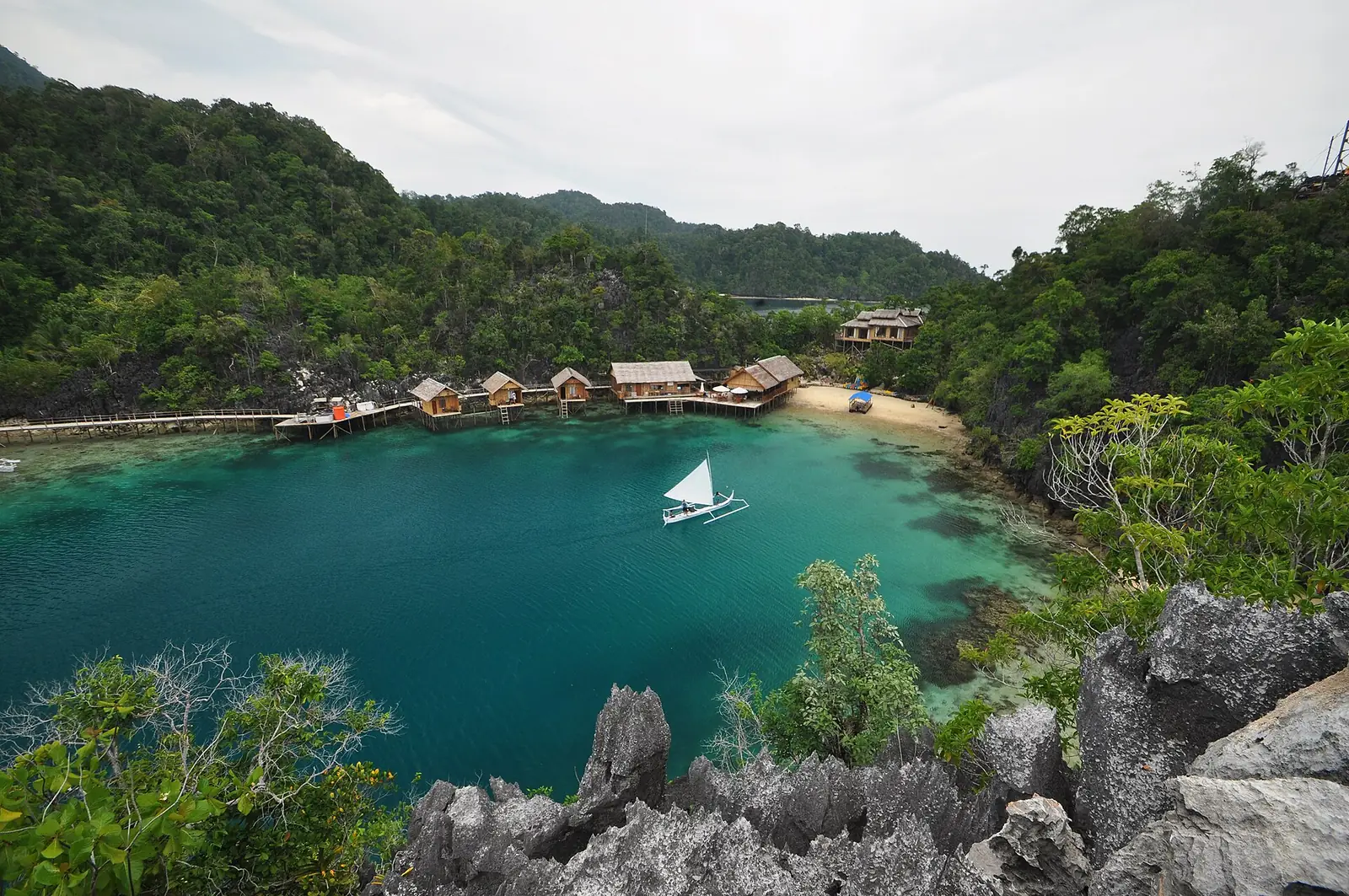
Labengki giant clams are tied to conservation work. Jawa Pos reported a self-funded effort since 2009 by a conservationist and eight villagers, and Naturevolution describes clams moved onto no-take reefs. One operator sends visitors to a shallow reef at Labengki Kecil. Totals differ by source and year, so no count here is a live figure. Look, never touch, and expect no guaranteed sighting.
Why are giant clams linked to Labengki?
Clams, or kima in Indonesian, come up in official, press and operator writing about the island. The Ministry of Tourism Jadesta portal says giant clams known as Kimaboe can be seen while snorkelling or diving at Labengki. Conservation photographs on yannbigant.com show Tridacna squamosa near Labengki village and Tridacna maxima south of the island. Operator Asik Travel gives the shallow clam reef at Labengki Kecil its own attraction page. Ask your crew whether that reef is one of the conservation sites described below. Our overview of Labengki Island sets the clams beside the other reasons people come.
There is a scientific thread too, though a loose one. Mongabay Indonesia cites a 2013 abstract by a clam researcher describing Tridacna kimaboe as a new species around Labengki, estimated second largest among giant clams. "Described as" is the right phrase: it is an account of a claim, not a settled classification. The longer story is on our page about the Kima Boe clam.
Who started the conservation work?
A conservationist and a group of villagers, with their own money, according to the press. Jawa Pos reported in January 2017 that a local conservationist and eight villagers had run a self-funded clam effort since October 2009, working two sites in Toli-Toli and Labengki waters, about one and a half hours apart by motor boat.
The NGO Naturevolution describes the method: over ten years, clams were gathered and moved onto reefs that local fishers accepted as no-take zones. That last detail deserves attention. A no-take reef depends on neighbours agreeing to leave it alone, so a visitor who handles a clam there is breaking a local bargain as well as disturbing an animal.
Government support came later. Mongabay says a provincial regulation, Perda Sultra No. 9 of 2018, set up a clam conservation area following the campaign. This rests on the article, so check the text of the regulation itself before citing boundaries or penalties.
How many Labengki giant clams are there?
Nobody can give you a current number from what is published. These three figures are the ones in circulation, and they measure different things.
| When | Source | Figure | What it counts |
|---|---|---|---|
| January 2017 | Jawa Pos | 8,400 clams | Placed in Toli-Toli and Labengki waters since October 2009 |
| Over ten years, undated | Naturevolution | About 8,000 clams of eight species | Gathered and moved; the scale of the work, not a census |
| July 2024 | Mongabay Indonesia | About 1,000 clams | What the conservationist said was left after theft; the passage concerns the area near Toli-Toli |
It is tempting to read that as a fall of seven thousand clams at Labengki. The sources do not support that. The first two describe clams moved over time across sites, the third is a spoken estimate reported for one area, and none is a survey of the reef you would swim over. The supportable reading is narrower: the effort was large, and by 2024 the person closest to it was reporting serious losses.
The named threats are concrete. The same Mongabay report blames theft and says fish bombing still occurred about once every three months in that area. On a wider scale, NOAA Fisheries says decades of intense harvest have driven the true giant clam to very low abundance through much of its range. For the state of the surrounding coral, see Labengki reef condition.
How big do they get, and which species are here?
Size claims need care, because the largest numbers do not come from Labengki. NOAA says Tridacna gigas is the largest giant clam, growing over a metre wide and more than 225 kg, at depths of 6 to 65 feet. That is a general species record. The Labengki-specific figure comes from the abstract cited by Mongabay, which gives Tridacna kimaboe an average maximum shell of 55.5 cm.
On diversity, Naturevolution says Southeast Sulawesi hosts eight species: six Tridacna and two Hippopus. So a clam you see may not be any of the headline species, and a guide's name for it may be a local one. Enjoy the animal, and do not take a label too seriously.
Are giant clams protected in Indonesia?
The two accounts disagree, and this page will not pick a winner on your behalf. Naturevolution says all giant clam species are officially protected in Indonesia and listed on CITES Appendix II, with export needing a special permit. Mongabay says a 2018 ministerial regulation names only Hippopus hippopus and Hippopus porcellanus as protected, replacing a 1999 rule that covered all clams.
Your behaviour should not depend on who is right. Take nothing, buy no clam shell or shell product, and carry none home. The risk of getting the law wrong falls on you, and a person who misreads a regulation still leaves a gap on a reef that others have tried to rebuild.
Why do clams matter to a reef?
Partly for what they do and partly for how much has been lost. Naturevolution reports that a large giant clam can filter several tons of seawater a day. NOAA's account of intense harvest shows how far a large species can fall when nothing limits the taking. There is a human point as well: on Naturevolution's account, local fishers accepted no-take reefs, which means giving up a catch. A visitor who looks without touching respects that choice.
How can visitors see them responsibly?
Asik Travel says the Labengki Kecil clam reef is shallow, tells visitors to look without touching or standing on it, and notes there may be a small fee or donation. It also suggests going at midday, as our snorkelling guide explains. Shallow water is the hazard, since feet and fins can reach the animals, so these habits matter here.
- Float flat on the surface, and do not stand on the reef to rest or clear your mask.
- Kick gently, away from the clams, if the water is very shallow.
- Keep hands off the mantle, even to get a clam to react for a photo.
- Ask who receives any fee or donation, and pay that person directly.
- If you are unsure of your swimming, tell the crew before entering. A refusal settles it, and an all-clear does not oblige you to go in.
Gear and technique are covered in our guide to Labengki snorkeling, and the community behind this reef area is described on the Labengki Kecil village page.
What do readers ask about the clams?
Are there giant clams at Labengki?
Yes, by several accounts. The Ministry of Tourism Jadesta portal says clams known as Kimaboe can be seen while snorkelling or diving, and Asik Travel describes a shallow clam reef at Labengki Kecil. Marine life is never guaranteed, so treat any sighting as luck.
Where can you see giant clams at Labengki?
Operator Asik Travel points visitors to a shallow reef at Labengki Kecil. A conservation photographer also recorded Tridacna squamosa near Labengki village and Tridacna maxima south of the island. Ask your boat crew which spot they use.
How big are the giant clams at Labengki?
Mongabay cites a 2013 abstract giving Tridacna kimaboe an average maximum shell of 55.5 cm, but the species status is unsettled. The metre-wide Tridacna gigas in NOAA figures is a general species record, not a Labengki one.
Who protects giant clams at Labengki?
Jawa Pos credits a conservationist and eight villagers with a self-funded effort from October 2009, and Naturevolution says fishers accepted no-take reefs. Mongabay adds that a 2018 Southeast Sulawesi provincial regulation set up a clam conservation area.
Are giant clams protected in Indonesia?
Sources conflict. Naturevolution says all species are protected and on CITES Appendix II. Mongabay says a 2018 regulation names only two Hippopus species. Whichever is right for a given clam, leave every one of them alone and buy no shells.
Why do giant clams matter?
They are large, long-exploited filter feeders. Naturevolution reports that a large clam can filter several tons of seawater a day, and NOAA says decades of intense harvest have left the true giant clam at very low abundance across much of its range.
Which sources support this page?
- Ministry of Tourism Jadesta portal: Desa Wisata Labengki
- yannbigant.com: marine conservation in Sulawesi
- Asik Travel: Labengki Kecil lagoon and giant clams
- Mongabay Indonesia: giant clams, July 2024
- Jawa Pos: clam recovery at Toli-Toli and Labengki, January 2017
- Naturevolution: giant clam conservation in Sulawesi
- NOAA Fisheries: true giant clam
How do I reach the desk?
Want a clam reef stop on your route? Name it when you write to the desk on WhatsApp 6281139414563 or at bd@juaraholding.com, and say whether you snorkel or only swim. We cannot promise a stop or a sighting. Our role and commercial interest are set out in the disclaimer.
Send the desk your dates, group size, and how you plan to reach Kendari. The desk replies in writing.
Ask the desk on WhatsApp bd@juaraholding.com